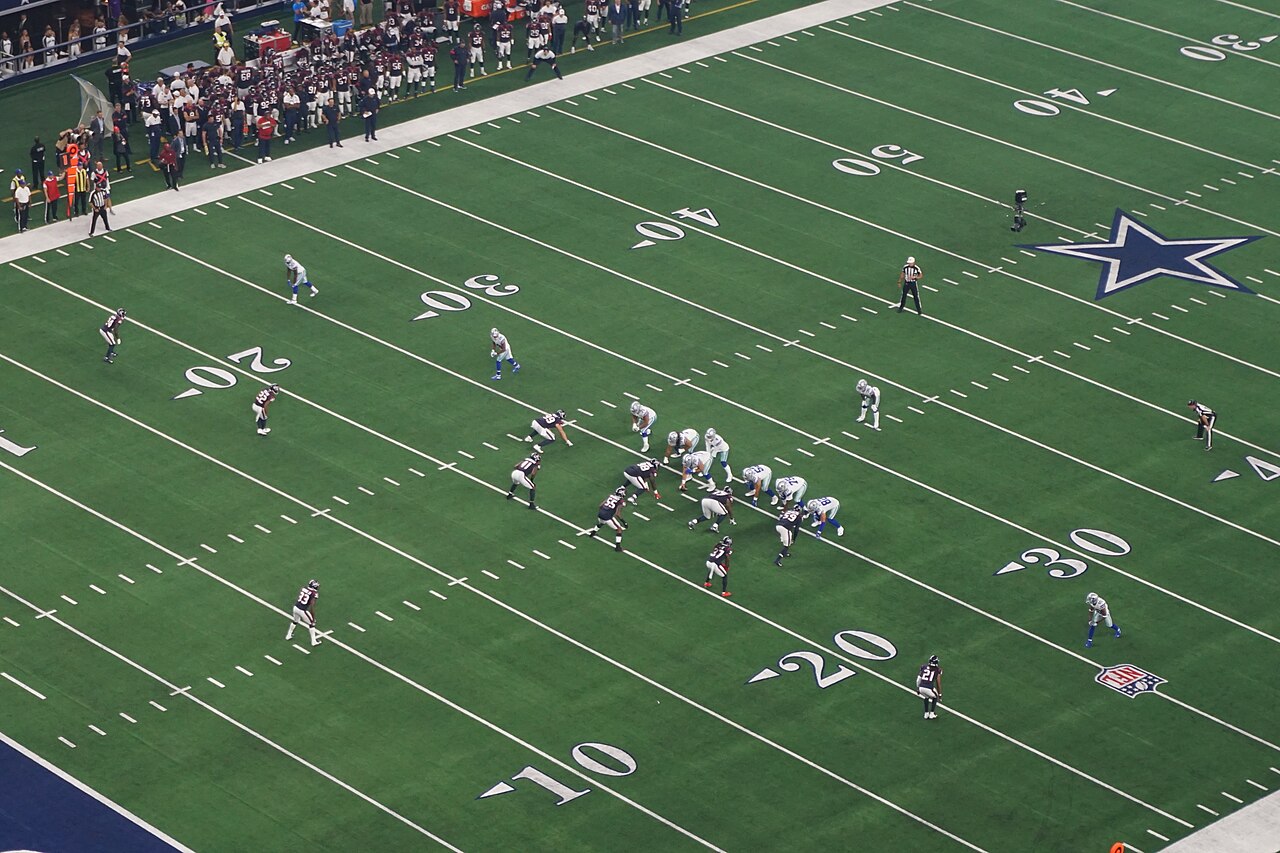
Following the ball is the natural way to watch a game. Watching what happens just before it moves gives you something else to follow: a question.
You do not need to diagnose a defense from the couch. Start with three things that are easier to see, and keep your first impression open to revision.
Who is on the field?
Notice the personnel before deciding what a formation means. How many receivers, tight ends, and backs are involved? Where are they lining up? The same player can create a different picture by moving to a different spot.
Personnel gives you context, not a guaranteed play call. Treat it as the first clue.
Where is the space?
Look at how the offense is spread out and where the defense appears to have numbers. Is one side crowded? Is a receiver isolated? Does a defender move toward the line late?
Pick one area to watch after the snap. You will have a clearer view of how that space changes than if you try to watch all twenty two players at once.
What changes with motion?
When an offensive player moves, notice the response. Does a defender follow, does the whole defense adjust, or does the picture stay mostly the same?
Movement can offer a clue about an assignment, but it is not proof of a particular coverage. A defense can disguise its intentions, and the camera angle can hide important details.
Take one question into the next snap
The useful habit is simple: notice something, watch how it develops, and be willing to revise your read. A replay is an opportunity to test an impression, not just repeat it with more confidence.
Try it during the next Cowboys game. One detail is enough to make a familiar play feel new.
Sign in to read the conversation and add your comment.
Sign in to comment